
Acid and water-based stains that soak into the slab and react with it. The color lives inside the concrete instead of sitting on top, so it cannot peel or chip off.
We install concrete staining throughout Tampa, St. Petersburg, Sarasota and Lakeland, plus Clearwater, Brandon, Riverview, Bradenton, Venice, Plant City and Winter Haven.
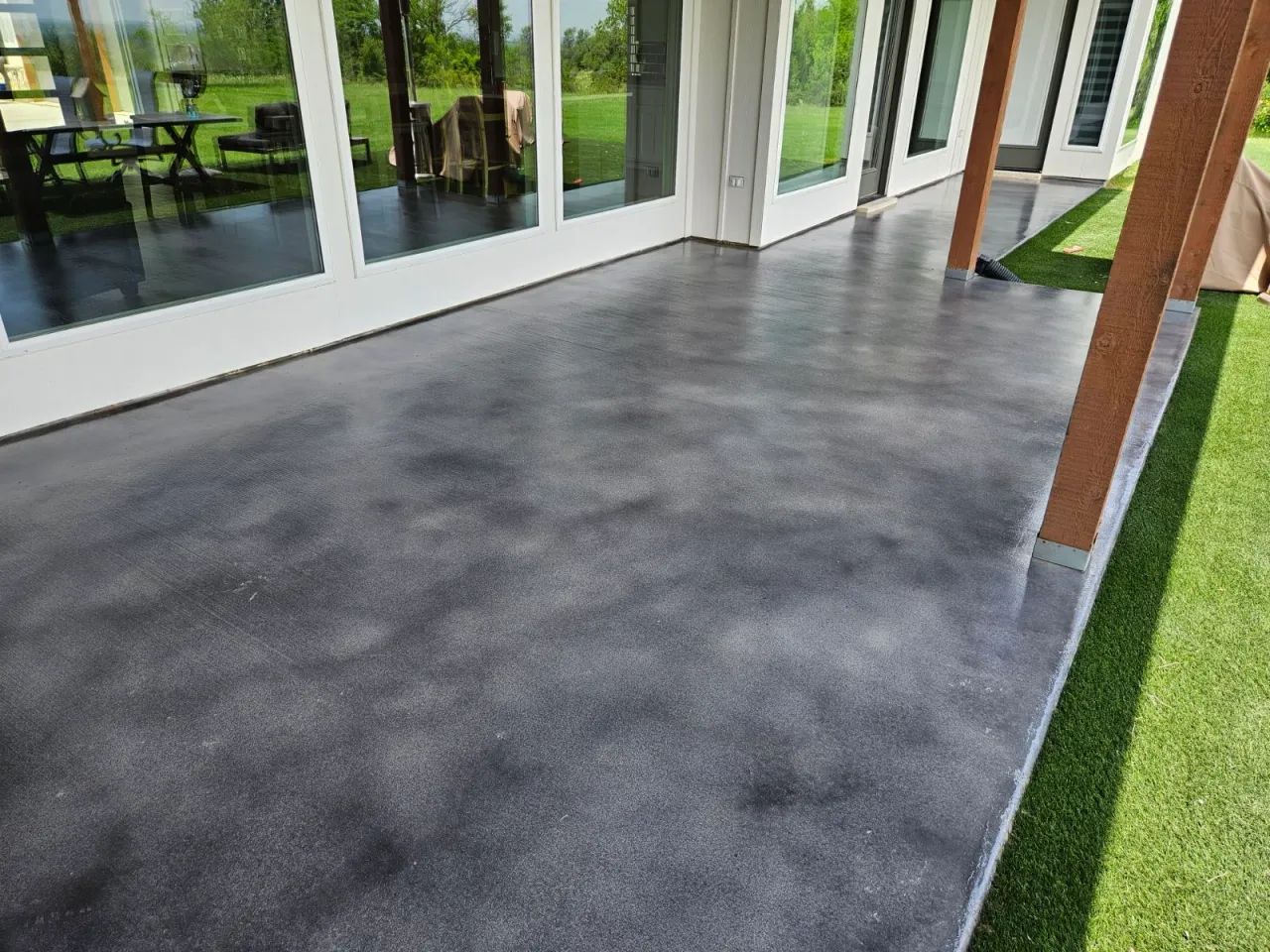
Stain has to penetrate to work. If the concrete was sealed or coated at any point, it will not take. We test a small area first and tell you straight if the slab needs grinding or is not a candidate.
The surface is cleaned and, where needed, ground to open the pores. Any previous sealer comes off completely. Residue left behind shows up permanently once the stain goes down.
Optional. Score lines cut into the slab before staining create tile, plank, grid or border patterns. Done at this stage so the stain settles into the cuts and defines them.
Acid stain reacts chemically with the lime in the concrete for mottled earth tones. Water-based stain is pigment driven with a far wider colour range and more control. Either way the colour ends up inside the slab, not on it.
Acid stain has to be neutralised and rinsed thoroughly, then dried completely. Sealing over unneutralised residue is how stained floors fail.
A wet-look or matte sealer goes over the top. It deepens the colour and takes the wear. The stain underneath is permanent — only the sealer needs renewing, every two to four years outdoors.
Reacts chemically with the lime in the concrete to produce mottled earth tones — browns, tans, rust, soft greens. Organic, variegated and permanent. No two slabs take it the same way.
Pigment-based and far wider in colour range, including greys, blacks, blues and custom matches. More predictable than acid stain and easier to control on a large or unusual slab.
Stain followed by a wet-look or matte sealer. The sealer deepens the colour and adds stain and UV protection, and it is the layer that gets renewed later.
Stain applied on top of a fresh overlay. Best of both — a corrected, resurfaced slab with permanent variegated colour instead of flat pigment.
Score lines cut into the slab before staining to create tile, plank or grid patterns. Turns a plain slab into something that reads as a designed floor.
Staining is usually the least expensive decorative option for a slab that is already in good shape, because there is no material being built up on top — you are colouring the concrete you already have.
Price moves on square footage, slab condition and prep (a previously sealed or coated slab has to be ground clean before stain will penetrate at all), single colour versus layered colour, and saw-cut pattern work.
The one thing that changes the answer entirely: if the slab is spalled, patched or badly damaged, stain will not hide it. Stain is translucent — it shows what is underneath. Damaged slabs need an overlay first, and we will say so.
Get a Firm Written Quote →The colour is permanent. It is inside the concrete, not on it, so it cannot peel, chip or delaminate the way a coating can. That is the entire argument for staining.
The sealer on top is what wears. Outdoors in Florida that gets renewed every two to four years; indoors far less often. Re-sealing is quick and inexpensive and it restores the depth of colour every time.
Because the colour cannot fail, a stained slab that looks tired almost always just needs cleaning and a fresh coat of sealer — not a redo.
Every concrete staining job we do starts the same way regardless of which city it is in — an on-site look at the actual slab, moisture testing where it is warranted, and a firm written price before anything starts.
In Tampa and Hillsborough County we work everything from 1920s bungalow slabs in South Tampa to new-build garages in Westchase and New Tampa. Across the bay in St. Petersburg and Pinellas County, salt air off the Gulf and the bay changes what holds up, so exterior specs there always account for it. Down in Sarasota and Manatee County — Siesta Key, Lakewood Ranch, Palmer Ranch, Venice — decorative and premium finishes make up most of the work. And in Lakeland and Polk County, larger lots, detached garages and workshop slabs are where high-build systems earn their keep.
Free estimates in all four, no travel charge. Request a quote or call (813) 603-7455.
Resin floor systems that bond into the slab and cure hard. A polyaspartic topcoat adds UV stability and gets you back on the floor in a day.
Learn more →Sprayed and troweled texture that gives concrete a slip-resistant profile. The standard for Florida pool decks because it stays cool and grips wet.
Learn more →Deep cleaning, re-sanding and sealing of brick and concrete pavers. Locks joint sand, stops weed growth and brings the color back.
Learn more →A cementitious layer troweled over existing concrete. Fixes spalling, discoloration and surface damage without tearing the slab out.
Learn more →Paint and coatings sit on top of the slab and can peel. Stain soaks in and chemically reacts with the concrete, so the color is part of the slab itself. It cannot chip or delaminate — it can only wear, and a sealer prevents most of that.
The stain itself is UV stable because the color is inside the concrete. What breaks down is the sealer on top, which is why exterior stained concrete gets re-sealed every few years. That is maintenance, not failure.
Yes, as long as the concrete is sound and has not been sealed or coated with something that blocks penetration. We test a small area first. Previously sealed slabs need the sealer ground off before stain will take.
The color is permanent. The sealer over it needs renewing every two to four years outdoors, less often inside. Re-sealing is straightforward and far cheaper than recoating.
Acid stain gives mottled earth tones — browns, tans, rust, soft greens — and looks organic and stone-like. Water-based stain covers a much wider color range including blues, grays and blacks, and is more predictable. We will show you samples on your actual slab.
Free on-site estimate, firm written pricing, no pressure. Most residential jobs finish in one to two days.