
Resin floor systems that bond into the slab and cure hard. A polyaspartic topcoat adds UV stability and gets you back on the floor in a day.
We install epoxy and polyaspartic coatings throughout Tampa, St. Petersburg, Sarasota and Lakeland, plus Clearwater, Brandon, Riverview, Bradenton, Venice, Plant City and Winter Haven.
We look at the actual concrete — moisture, cracking, spalling, previous coatings, drainage. Below-grade and older slabs get moisture tested before we quote, because vapour coming up through concrete lifts a coating from underneath no matter what goes on top.
The slab is mechanically ground with diamond tooling and vacuumed as we go. Never acid etch. Grinding opens a real profile for the resin to key into — this single step is why coatings last a decade instead of peeling in a summer.
Spalls patched, cracks chased and filled, control joints handled correctly. We fix the concrete before we finish it. Coating over damage just gives you smooth damage.
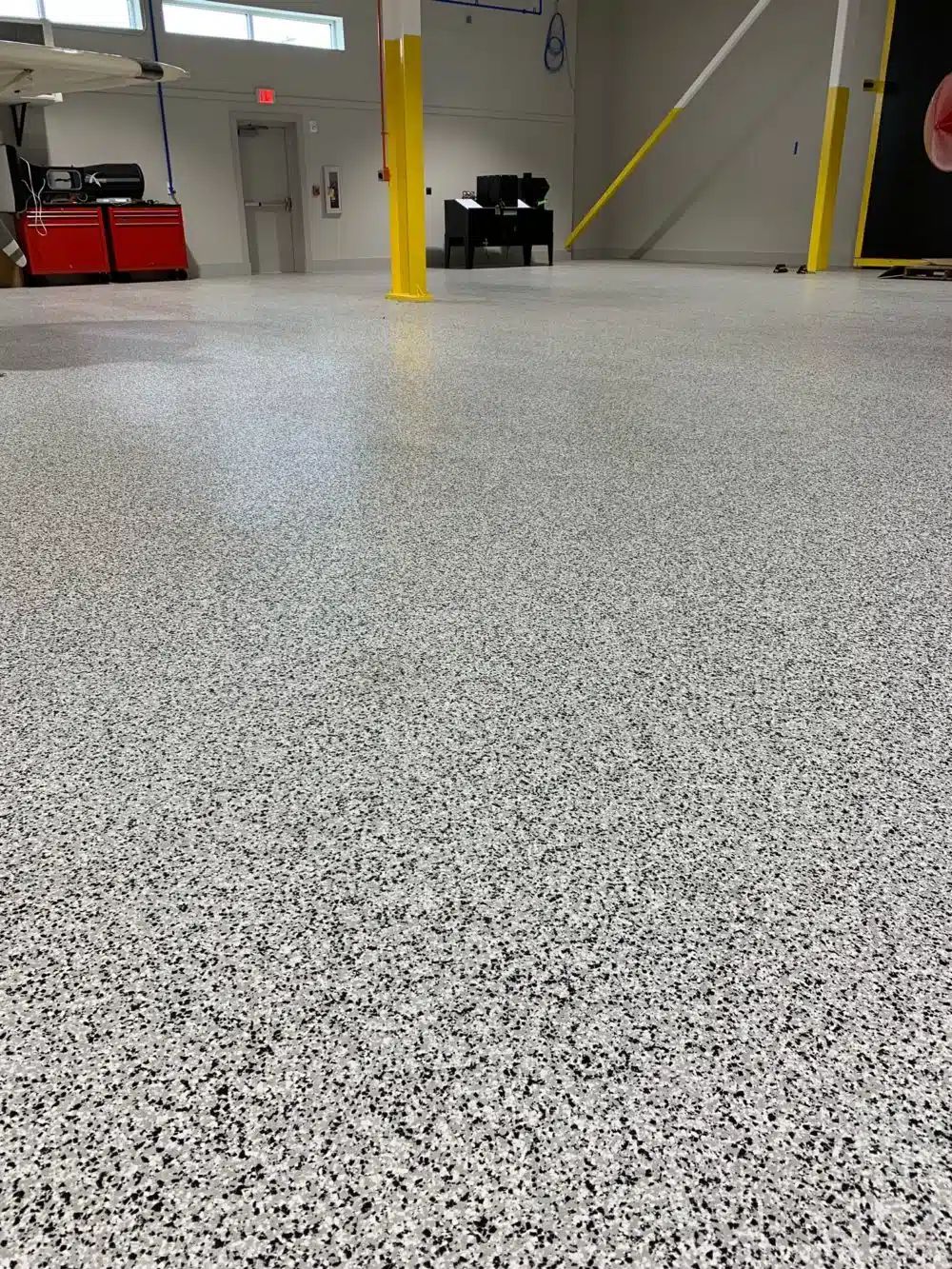
Pigmented epoxy base goes down and vinyl flake is broadcast into it to refusal — until the surface will not take any more. That full broadcast is what gives the floor its depth and its grip.
Once cured, loose flake is scraped back and vacuumed off. Skipping this is why some floors feel rough and shed for months.
Two coats of polyaspartic seal it all in. Polyaspartic is UV stable where epoxy is not, so it will not yellow or chalk. Foot traffic within hours, vehicles the next day.
Vinyl flake broadcast into the wet epoxy to refusal, then sealed with polyaspartic. Adds grip, hides slab imperfections and hides dirt. The most requested residential garage system in Florida and the one we install most.
Coloured quartz instead of vinyl flake. Heavier, more slip resistant and more durable than flake, which is why it shows up in commercial kitchens, locker rooms and wet-process areas.
Metallic pigments moved through the resin while it is wet to create a poured, marbled, three-dimensional look. No two floors come out the same. Popular on showroom garages and interior feature floors.
Straight pigmented epoxy with a polyaspartic topcoat. Clean, bright and easy to keep clean. Common in warehouses, utility rooms and shops where function beats decoration.
Thicker film builds for forklift traffic, pallet drag and heavy loads. Film thickness gets matched to your actual traffic rather than a one-size spec.
Epoxy flooring is priced per square foot, and the spread between a cheap quote and an honest one is almost always prep. Grinding a slab properly takes hours and equipment. Acid etching takes a jug of acid and twenty minutes. The finished floor looks identical on day one.
The things that actually move your number: square footage (bigger floors cost less per foot), slab condition (spalling, cracks and old coatings all add prep time), moisture (a vapor-barrier primer is real added cost when readings call for it), and system choice (solid color is the value option, metallic is the premium one).
We quote firm and in writing after seeing the slab. If someone gives you a per-foot price over the phone without looking at your concrete, they are guessing, and the number will move once they show up.
Get a Firm Written Quote →A properly prepped and installed epoxy and polyaspartic system runs 10 to 20 years indoors. Garages, basements and interior floors sit at the top of that range because they are out of the sun.
Outdoors, life depends on UV exposure and traffic. This is exactly why a polyaspartic topcoat matters in Florida — bare epoxy chalks and yellows in direct sun, and a UV-stable topcoat is what keeps an exterior floor looking right past year two.
Maintenance is close to nothing. Sweep it, mop it, wipe up spills. No waxing, no resealing, no stripping. If a section ever gets damaged it can be repaired without redoing the whole floor.
Every epoxy and polyaspartic coatings job we do starts the same way regardless of which city it is in — an on-site look at the actual slab, moisture testing where it is warranted, and a firm written price before anything starts.
In Tampa and Hillsborough County we work everything from 1920s bungalow slabs in South Tampa to new-build garages in Westchase and New Tampa. Across the bay in St. Petersburg and Pinellas County, salt air off the Gulf and the bay changes what holds up, so exterior specs there always account for it. Down in Sarasota and Manatee County — Siesta Key, Lakewood Ranch, Palmer Ranch, Venice — decorative and premium finishes make up most of the work. And in Lakeland and Polk County, larger lots, detached garages and workshop slabs are where high-build systems earn their keep.
Free estimates in all four, no travel charge. Request a quote or call (813) 603-7455.
Sprayed and troweled texture that gives concrete a slip-resistant profile. The standard for Florida pool decks because it stays cool and grips wet.
Learn more →Acid and water-based stains that soak into the slab and react with it. The color lives inside the concrete instead of sitting on top, so it cannot peel or chip off.
Learn more →Deep cleaning, re-sanding and sealing of brick and concrete pavers. Locks joint sand, stops weed growth and brings the color back.
Learn more →A cementitious layer troweled over existing concrete. Fixes spalling, discoloration and surface damage without tearing the slab out.
Learn more →Epoxy is the build coat — it bonds to the slab and provides thickness and strength. Polyaspartic is the topcoat: UV stable, cures in a fraction of the time, and will not yellow in sunlight. Most of our floors use both, epoxy underneath and polyaspartic on top.
Yes. A polyaspartic topcoat is hot-tire resistant, which standard garage paint and big-box DIY kits are not. Foot traffic within hours, vehicles the next day.
A properly prepped and installed system runs 10 to 20 years indoors. Exterior life depends on sun and traffic, but a UV-stable topcoat is what gets you there.
Yes — full flake, quartz broadcast, metallic and solid color. Flake hides imperfections and adds grip; metallic gives a poured, marbled look popular on showroom and high-end garage floors.
It depends on square footage, slab condition and the system. A standard two-car garage in flake epoxy with a polyaspartic topcoat is the most common job we quote. We price it firm after seeing the slab.
Free on-site estimate, firm written pricing, no pressure. Most residential jobs finish in one to two days.